

Have you heard about how impactful small group instruction for math is (and maybe even been encouraged by a teacher friend or admin to try it out), but still feel completely overwhelmed with how to get started and make it work?
Small group instruction sounds amazing in theory, right? You picture yourself calmly sitting at your teacher table, working with a few students at a time, playing fun math games, using data, differentiating like a pro, and feeling like the math teacher you always hoped you’d be.
But then reality sets in.
You start thinking about your schedule, math stations, student behaviors, manipulatives, rotations, materials, interruptions, pull-outs, and that one kid who somehow turns dice into projectiles in under 3 seconds.
Suddenly, small group instruction in the classroom feels less like a picture-perfect guided math dream and more like one more thing on your already overflowing teacher plate.
I was right there with you about 14 years ago! I remember being sent to a one-day training by my admin and expected to just start implementing small group instruction. As you can imagine… that did not go so well.
When I first tried math stations, I truly thought my students would just know what to do. (Spoiler alert: they did not). I had activities ready, cute little materials prepped, and the best intentions.
But I did not have the systems, routines, or classroom setup my students needed to be successful. And let me tell you, good intentions do not magically teach children how to rotate, share materials, work independently, or avoid karate-chopping domino towers. True story.
However, I didn’t give up, because I knew how important small group instruction was for the success and confidence of my students (because I was that kid that needed it more than anything!)
After years of trial and error and figuring out what worked, I realized that starting small groups doesn’t have to be overwhelming. In fact, the simpler you make it, the better!
You do not need a Pinterest-perfect classroom, 47 laminated stations, a brand-new storage system, or a complete math block overhaul to begin. You just need to start with a strong foundation, and that’s exactly what I’m going to share in this blog post!
Before you ever pull a small group to your table, you need to think about your classroom setup.
This does not mean your classroom needs to look like it belongs on Instagram. We’re going for a student-centered classroom here… not influencer-worthy.
When you’re preparing for small group instruction for math, ask yourself:
That last one matters… a lot.
Once you are sitting at your small group table, the goal is for students to work as independently as possible. If they constantly have to ask where the dice are, where the recording sheets go, or what station they’re supposed to be at, you’ll spend your entire small group time putting out fires instead of teaching.
And teacher friend, we are trying to avoid the dumpster fire at all costs.
When I first started, my math station materials were basically spread all over the room.
My rotation board was in one place.
My manipulatives were somewhere else.
My station baskets were in another random corner.
It technically existed, but it did not flow well for students.
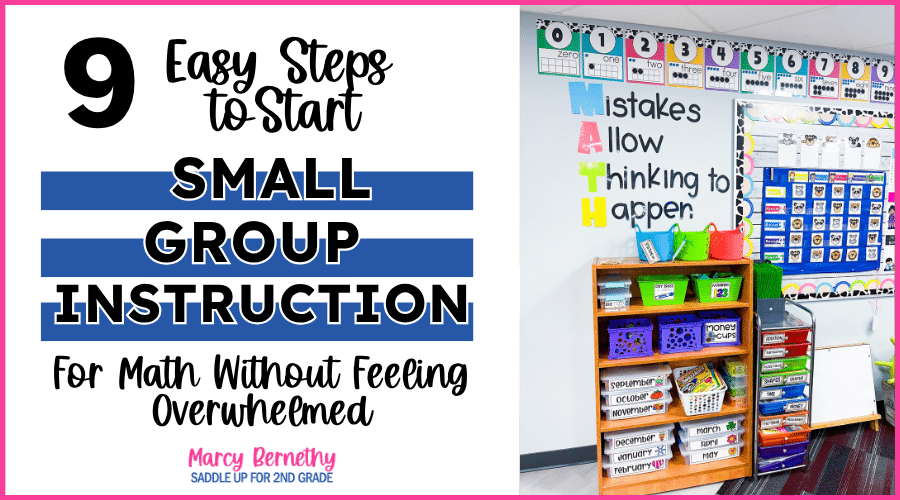
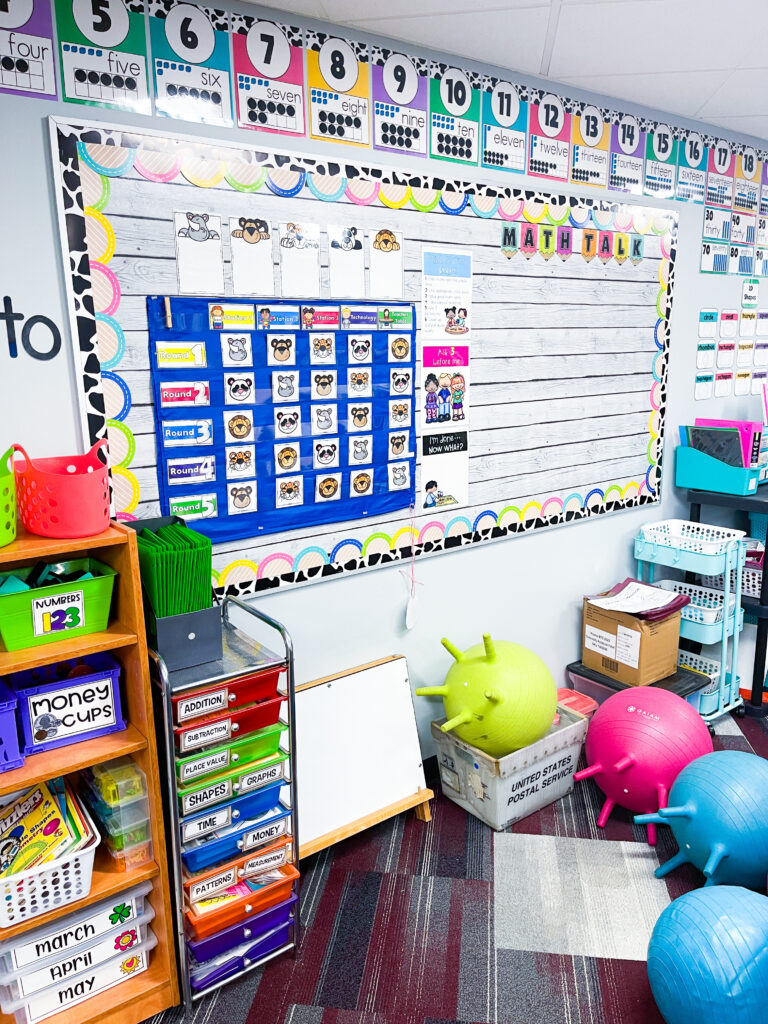
If you are trying to figure out how to start small groups, one of the best things you can do is create one designated math station area.
This might include:
It does not have to be fancy.
A shelf, a few baskets, and clear labels can go a long way. The goal is not to create the most beautiful math station setup… it’s for students to know where things are and how to use them. That’s all that matters!
Simple systems beat cute chaos every single time.
One thing that makes small group instruction in the classroom feel overwhelming is All. The. Stuff.
Math comes with a LOT of stuff.
Dice.
Counters.
Base-ten blocks.
Number cards.
Mini erasers from the Target Dollar Spot that you bought 3 years ago because they were tiny pumpkins and obviously you needed them.
No judgment. I’ve been there, done that, and still fall victim to it sometimes.
But if students cannot find or manage the materials, small groups will feel harder than they need to.
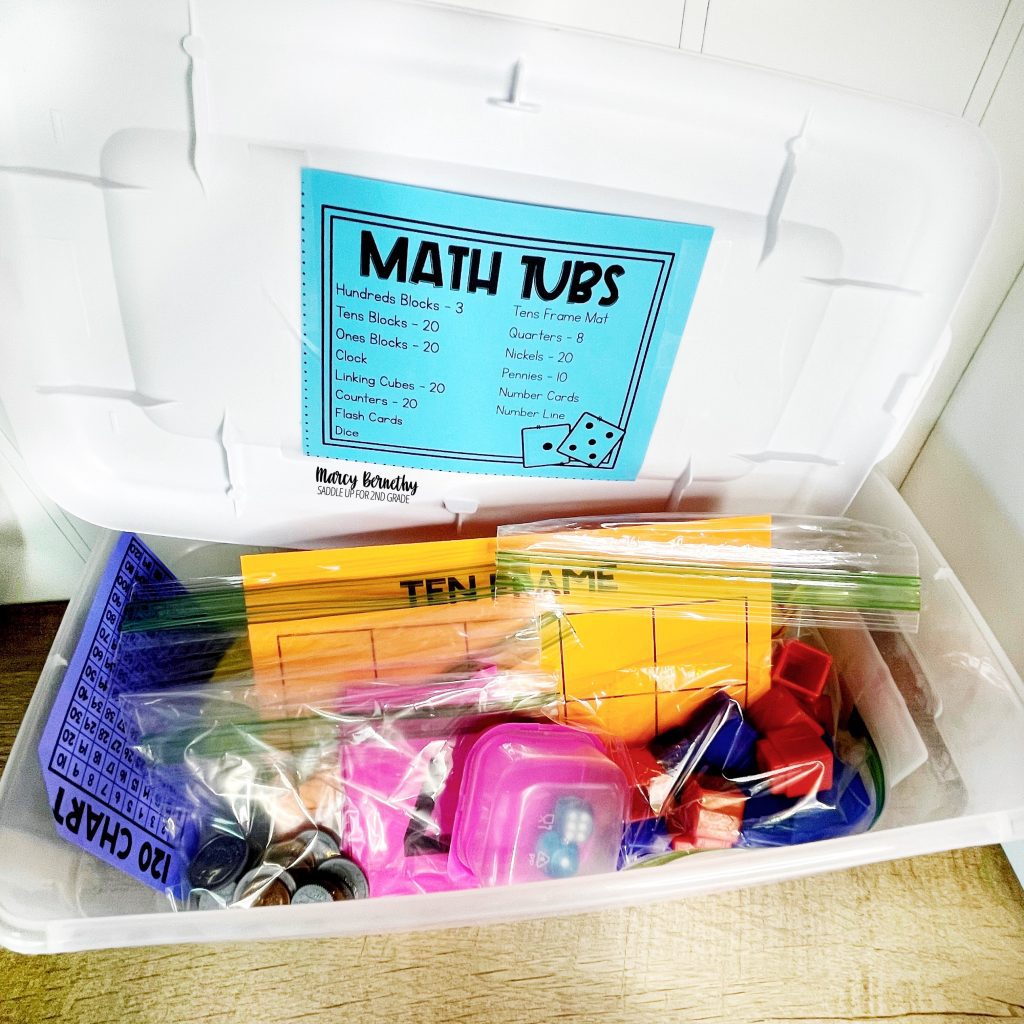
You do not need to reorganize your entire classroom overnight, but you do want to think about how students will access the tools they need.
Here’s a few simple ideas:
Because nothing says “teacher stress” like digging through a bin of pattern blocks, coins, dice, and one random googly eye while 23 children stare at you.
Your small group table does not need to be elaborate, but it does need to be functional.
This is where the real magic of your math instruction will happen.
At your small group table, you’ll be able to:
But for this space to work well, you need to have materials nearby and a clear view of the rest of your classroom. I love using my teacher cart organization hack to help with this!
Ask yourself:
It all takes practice, especially that last one.
Which brings me to one of the biggest mistakes teachers make when starting small groups.
Your students are capable, but they do not automatically know how to do small groups.
They do not naturally know how to rotate quietly, share materials, solve a problem with a partner, use manipulatives correctly, clean up a station, or work independently while you are teaching another group.
Again, they are capable, but it takes a lot of teaching, modeling, practicing, and reteaching expectations until students understand exactly what to do.
This is where so many teachers get frustrated.
They try small groups for a few days, everything feels loud and messy, and they think, “Well, this just doesn’t work for my class.”
They think small groups just won’t work for them, when really, the problem is that the students need more time learning the routines.
You have to teach them procedures for:
And yes, this takes time, patience… and a little more time and patience.
But trust me, it’s worth it, because once those routines are in place, your math block starts to feel completely different (in the best way).
When you’re starting small groups, please listen to me when I say, do not try to do everything at once.
You do not need to launch full math stations, 4 rotations, differentiated groups, data binders, student goal sheets, and color-coded everything on day one.
That is a recipe for disaster.
Start small.
You might begin with:
Small group instruction in the classroom is not all or nothing.
You can (and should!) build toward it.
The goal is not to create a perfect guided math block overnight. The goal is to create systems that are sustainable for you and helpful for your students.
One of the most common reasons teachers feel overwhelmed by small groups is because they look at someone else’s schedule and think, “Well, that would be nice if I had 90 minutes for math.”
But maybe you don’t.
Maybe you have 45 minutes.
Maybe you have 60 minutes, but 5 students leave for services halfway through.
Maybe your math block gets interrupted by assemblies, behavior needs, fire drills, or birthday cupcakes.
Real classrooms are messy, but that does not mean small groups are impossible.
It just means your small group system has to fit your actual classroom, not the perfect version of your classroom that exists only on paper.
When planning small group instruction for math, think about:
You may not see every group every day. That is okay!
You may need to alternate whole group days and small group days. That is okay too.
You may only start with one small group a day. Still okay.
Guided math is flexible… that is one of the best things about it.
This one is hard for us as teachers.
We love to overplan.
We find a great video, an anchor chart, a hands-on activity, an interactive notebook page, a partner game, and a cute math craft, and suddenly we’re trying to squeeze 6 activities into a 20-minute lesson.
But when you are trying to make room for small groups, you have to simplify.
Your whole group lesson does not need to carry the entire weight of your math instruction.
That is the shift.
Your mini lesson introduces or reviews the key concept. Then your small group time gives you the chance to provide targeted instruction where students need it most.
Keep the lesson short and focused, choose one or two meaningful activities, then move on and let your small groups work their magic.
That small shift can make your math block feel so much more manageable.
Some days, your math block will run beautifully. Students will rotate smoothly, your small group lesson will click, everyone will know where their materials are, and you’ll think, “Wow, look at us crushing it today!”
Other days? A student will lose a recording sheet, someone will spill manipulatives everywhere, the internet will go down, and your perfectly planned rotation schedule will fall apart before 10:00 a.m.
That does not mean you failed. It means you teach real children.
Flexibility is a huge part of making small groups work.
If you do not get to every group, adjust.
If a lesson takes longer than planned, adjust.
If your students need more practice with routines, adjust.
If your schedule changes, adjust.
The name of the small group game is progress over perfection!
If you are feeling overwhelmed with starting small group math instruction, start here:
That is enough to begin.
You do not have to have every single detail figured out before you start. You just need a foundation, and once that foundation is in place, small groups become so much more doable.
This blog post gives you a starting point, but there is so much more that goes into making small group math instruction actually work.
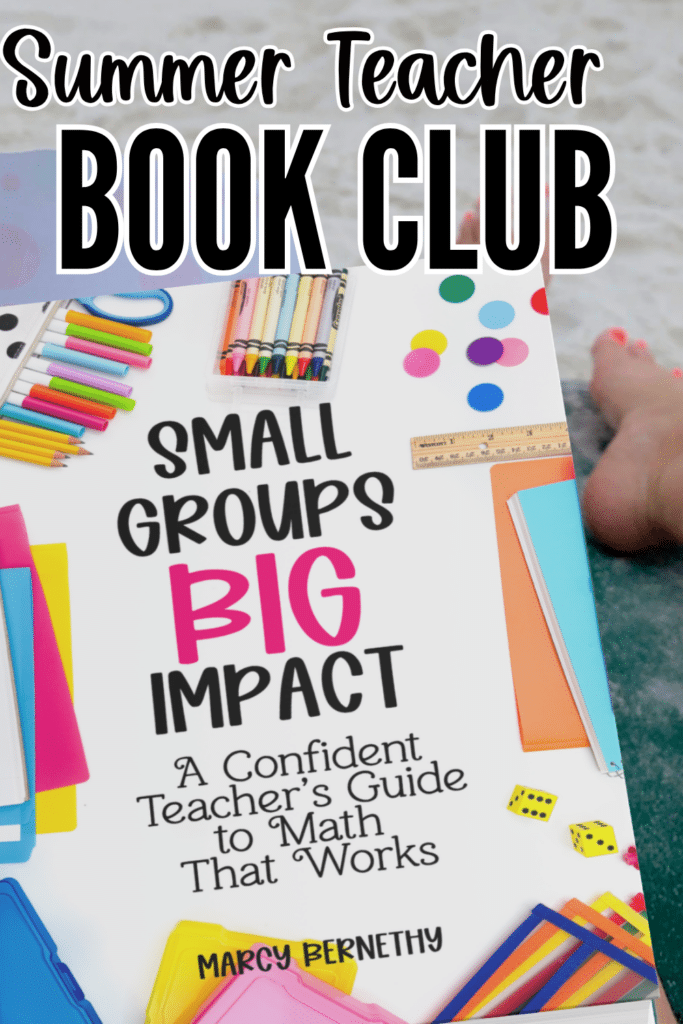
Inside my book, Small Groups, Big Impact, I walk you through the full guided math framework step-by-step, including:
These are the exact systems I’ve tested, tweaked, and used in my own classroom for well over 10 years.
They are real strategies for real teachers with real students.
If you’re ready to stop feeling overwhelmed and finally have a clear plan for small group instruction for math, I’d love to walk you through it inside Small Groups, Big Impact.
Think of this as having your very own small group math manual right at your fingertips (with a helpful teacher friend there to help you every step of the way!).
And be sure to join us for the Summer Teacher Book Study, starting June 16th, 2026!