

If you’re an elementary math teacher, you’ve probably had a math lesson (or ten!) where you looked around at your students and thought… ”well, that did NOT go how I planned it!”
Half of your students are were lost and staring off into space, three of them finished before you even got through the directions, and a few were still trying to find a pencil in the mess that is their desk.
You automatically turn on yourself, thinking things like:
Am I explaining this the right way?
Should I be doing something different?
How am I supposed to help ALL of these students in so little time?
Am I even qualified to teach math?!
I felt that exact same way in my early years of teaching. But in talking with veteran teachers and my mentor next door (who consoled me many times in those early years), even the most experienced elementary math teachers can go through seasons where teaching math just feels HARD. Whether it’s a tough group of kiddos, a new curriculum, or a new schedule, there’s a lot of factors that can make it feel that way.
But here’s the good news… building confidence in teaching math isn’t about having perfectly planned lessons or knowing the answer to every question your students throw your way. And it definitely doesn’t mean every student magically understands the lesson the first time you teach it (because that rarely happens… that’s why we do small groups, teacher friend!).
Confidence comes from knowing how to figure out what your students understand, where they’re struggling, and what you’re going to do next.
Having a few simple systems and strategies you can rely on can make a HUGE difference, not only for your students, but for your confidence as a teacher, too.
So, if math has started to feel a little overwhelming lately, let’s change that! In this blog post, I’m sharing 7 action steps you can take to simplify your math block, better meet your students’ needs, and start feeling confident teaching math again.
Let’s be real… teaching elementary math is A LOT!
You’re expected to teach grade-level standards, follow your curriculum, differentiate instruction, fill learning gaps, challenge your advanced students, assess everyone, pull small groups, manage centers, and somehow squeeze ALL of that into your math block. And for a lot of us teachers… that’s only about 60 minutes (which is NOT enough in my opinion!).
When you constantly feel like you’re behind or not doing enough, it’s easy to assume that you’re the problem. But before you go blaming yourself or adding another activity, center, intervention, or fancy new system to your plate, take a look at what you’re already doing.
Ask yourself:
💡 ACTION STEP: Choose ONE thing in your current math block that feels unnecessarily complicated. Then focus on simplifying it this week.
Maybe that means using the same center structure with different skills instead of introducing brand-new games every week. Maybe you stop creating elaborate activities when a whiteboard and a handful of manipulatives would accomplish the same goal.
Simple does not mean ineffective.
In fact, the more you simplify the parts that don’t matter, the more energy you have for the parts that do.
One of the fastest ways to lose confidence teaching math is to know your students are struggling… but have no idea what to do about it.
So instead of saying, “They just don’t understand fractions,” get more specific.
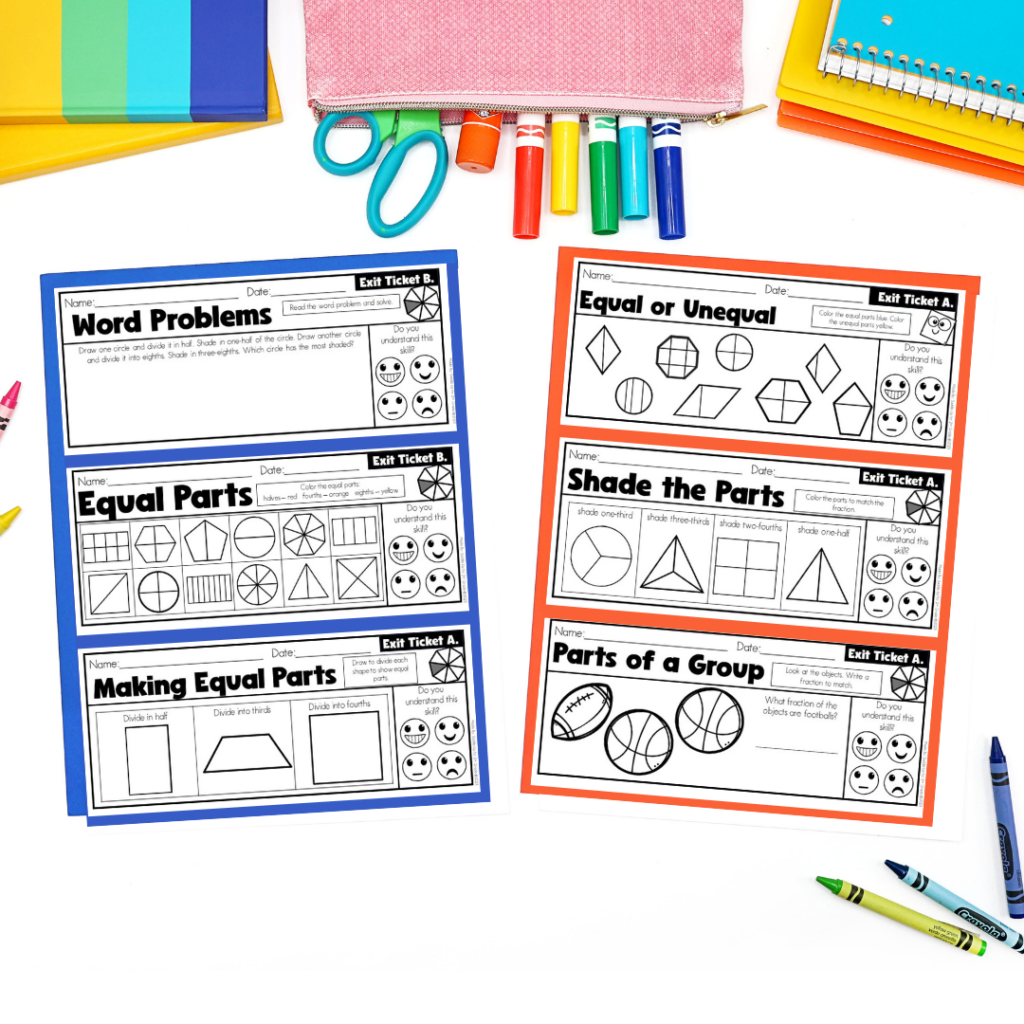
You don’t need a giant formal assessment every time you want this information.
Use quick checks like:
The goal isn’t to collect more data just for the sake of having data.
The goal is to figure out your students’ next instructional step.
💡 ACTION STEP: Pick one skill your students are currently struggling with. Break that skill into 3-5 smaller prerequisite skills. Use a quick check to identify where understanding starts to fall apart.
Now you have something you can actually teach.
Once you know what you need to teach specific students, this is where small groups come in and change the game.
Think about how hard it is to differentiate during a whole-group lesson.
You’ve got one student who still needs concrete manipulatives, another who’s ready to move to pictures, another who’s working abstractly, and another who’s an entire grade level behind.
Trying to meet all of those needs at exactly the same time? Yeah… not happening!
Small-group math instruction gives you the opportunity to meet students where they actually are.
Most importantly, you get to LISTEN.
When you’re sitting with four or five students and asking them to explain their thinking, you learn so much more than you can from looking at 25 completed worksheets.
💡 ACTION STEP: Instead of grouping students as simply “high,” “middle,” and “low,” try grouping them by a specific instructional need.
Your groups might look like:
Group 1: Needs prerequisite skill practice
Group 2: Understands the concept but needs guided practice
Group 3: Ready to apply the skill independently
Group 4: Ready for extension or problem solving
And remember… these groups should change.
Students aren’t permanently assigned to a “low group.” You’re simply grouping them based on what they need right now. They might be in the “low group” for one unit and the “high group” for another.
If the idea of small groups sounds great but you’re thinking, “Okay, Marcy…but what am I actually supposed to DO when they get to my table?” that’s exactly why I wrote Small Groups, Big Impact.
Inside the book, I walk you through how to plan, organize, and teach differentiated small groups without spending your entire planning period trying to figure it out.
A lot of teachers get stuck thinking that your small group lesson should be a different version of your whole-group lesson again, but with fewer kids.
When planning a small group lesson, ask yourself, “What does THIS group need from me today?”
That might mean:
You don’t necessarily need a completely different lesson plan for every group, either.
Let’s say you’re working on two-digit addition.
One group might build problems with base-ten blocks.
Another might draw models and connect them to an equation.
Another might solve independently and explain which strategy was most efficient.
Same general concept, different level of support.
💡 ACTION STEP: Before your next small group, finish this sentence:
“By the end of these 15 minutes, I want these students to be able to ______.”
If you can’t answer that clearly, your small group probably needs a more specific focus.
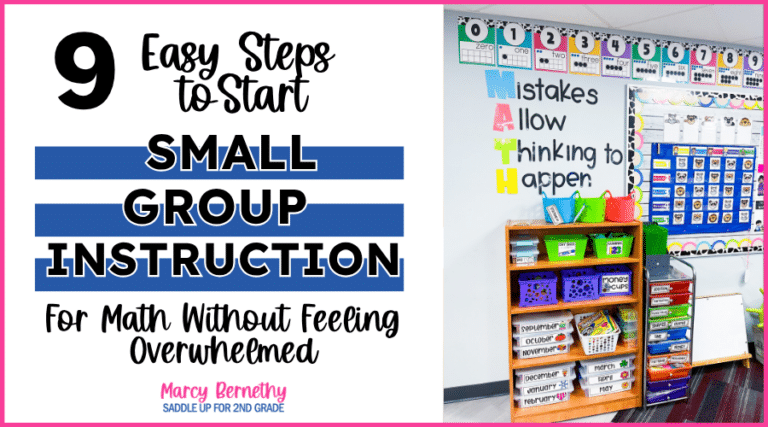
If you’re looking for more support in actually starting small groups, check out this blog post on 9 steps to starting small group instruction.
Let’s just say… a correct answer doesn’t always equal understanding. Anyone have a student that likes to guess?!
We don’t just want students to get to the right answer… we want them to know why the answer is what it is, not just memorize enough steps to get through today’s worksheet.
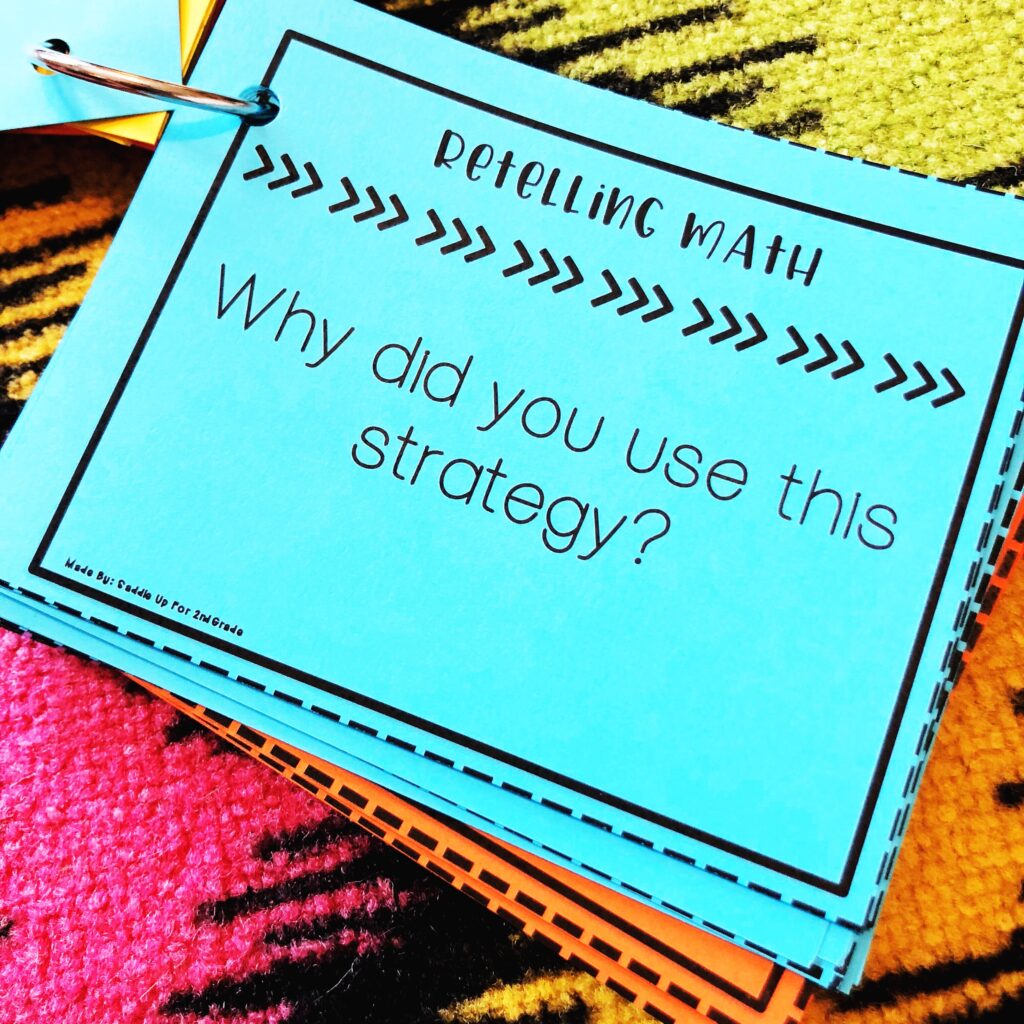
One of the easiest ways to check for understanding is to ask students to explain their thinking.
Try questions like:
And then… give them time to answer.
That silence can feel like forever when a table of little faces are staring back at you, but don’t rush in and answer for them.
Give students time to think, use manipulatives, draw models, talk through their reasoning, and make mistakes. Yes… we want them to make mistakes, because mistakes are where learning happens!
Their explanations will tell you a lot about what they understand.
💡 ACTION STEP: During tomorrow’s math lesson, choose ONE problem and ask at least three students to explain how they solved it. Then, compare their strategies as a class. I love using these Math Question Stems.
STOP.
I know it sounds crazy, but seriously, you are allowed to stop.
If you’re halfway through a lesson and realize your students have absolutely no idea what’s happening, continuing for another 25 minutes because that’s what the lesson plan says isn’t helping anyone.
A lesson plan is a plan. It’s not a legally binding contract.
Pause and figure out where things went off the rails.
Ask yourself:
Then adjust.
Maybe you pull out manipulatives, model the concept a different way, or stop the whole-group lesson and address the misconception during tomorrow’s small groups.
Changing your plan doesn’t mean the lesson failed.
Recognizing what your students need and responding to it is good teaching.
💡 ACTION STEP: The next time a lesson isn’t clicking, don’t immediately reteach the entire thing. Write down the specific point where students became confused. Use that information to decide whether you need to reteach the concept to the whole group, pull a small group, or revisit a prerequisite skill.
You don’t need to reinvent your math block every Monday morning.
Predictable routines are good for students and they’re really good for teachers.
When students already know what to do during independent practice, centers, and transitions, you don’t have to spend half your small-group time putting out fires across the room.
Try creating predictable routines for:
And guess what?! Your activities can be predictable, too!
Students don’t need five brand-new center games every week.
Use familiar activity formats and swap out the skill.
Students spend less time figuring out how to play and more time actually doing the math, and you spend less time laminating tiny pieces of paper at 9:00 PM and explaining directions every single day. Everybody wins!
💡 ACTION STEP: Write down the three moments in your math block when students need you the most. Choose ONE of those moments and create a routine students can follow without your help.
Confidence as a math teacher doesn’t come before you do the work. It comes because you do the work.
Every time you go through that process, you learn more about your students and about yourself as a teacher.
So instead of measuring your confidence as a teacher by whether every lesson goes perfectly, start asking yourself better questions:
Did I notice when my students were confused?
Did I figure out where the misconception was?
Did I adjust my instruction?
Do I know what I want to try next?
That’s what confident teaching actually looks like. So start small and pick one thing to try first.
Maybe that’s using exit tickets more intentionally, creating flexible small groups, simplifying centers, or asking more questions.
Choose one change, try it consistently, and pay attention to how that impacts your math instruction. Then build from there.
If you want to implement small-group instruction into your math block, but you’re still not quite sure how to make it work, I’ve got you!
Remember that new teacher (AKA… younger me!) I told you about at the beginning of this post who was constantly questioning whether she was doing this whole math teacher thing right? I wrote Small Groups, Big Impact with her in mind.
It’s the practical roadmap I wish I’d had during those early years of teaching.
Inside, we’ll walk through how to use your data, group students, decide what to teach, differentiate instruction, organize your math block, and create small groups that actually move your students forward.
Because implementing small-group math instruction doesn’t need to feel like climbing a giant mountain. With the right systems in place, it can actually be the thing that makes teaching math feel manageable (and dare I say… FUN!) again.
Grab your copy of Small Groups, Big Impact here.