

Is math anxiety in students something you’ve been noticing in your classroom? While this might not be your typical math conversation… it’s more common than I think a lot of people realize. And honestly? I think a lot of teachers carry math anxiety with them too… me being one of them. I was the kid that struggled with math, so I can spot the signs right away.
Math anxiety might show up in your classroom like:
While our first instinct as teachers is to solve the problem and start trying to fix math anxiety in our students, we first have to understand what math anxiety actually is and why so many children experience it in the first place.
For me, math anxiety started at a young age. Timed math fact tests made my stomach hurt. Walking into middle school math class filled me with dread. And when I got the phone call years later offering me a second-grade math teaching position, you’d think I would have been excited (and I was), but I was silently panicking on the inside.
Because underneath the smile and enthusiastic “yes,” I was terrified that I wasn’t good enough at math to teach it.
But guess what? That fear ended up changing the entire way I teach math today, and (not to toot my own horn) I think it’s what makes me a GREAT math teacher.
So, if you’re a teacher who’s struggled with math in the past, or you’re simply wanting to do things differently so your students can truly thrive in math, keep reading, because I’m going to break down what math anxiety is, why it’s actually super common, and how you can deal with it as the GREAT teacher you are!
Math anxiety in students is more than just “not liking math.” It’s a deep-seeded sense of fear, overwhelm, avoidance, frustration, and shutting down emotionally during math tasks.
You may have students who you think are just “acting out,” or “can’t stay on task.” In reality, there might be something much deeper going on. Kids that struggle with math anxiety do tend to act out and need constant redirection. Why? Because they’re trying to divert the attention away from math altogether… even if that means behaving negatively.
For many students, math anxiety shows up physically and emotionally and can look like:
For others, they have a different way of dealing with it. They simply sit there quietly, pretending they understand because asking for help feels scarier than getting it wrong.
I know this because… I was that student.
Growing up, math never came easily to me. Timed math fact tests (90s kids… you know the ones!) were literally my nemesis.
I still remember sitting there staring at those “Mad Minute” drills while everyone around me was whizzing through them. I would barely get halfway done after the timer went off, and I just knew everyone was staring and judging me.
Once math started including letters instead of just numbers, things went downhill. Middle school math filled me with anxiety, and by high school, I had started resenting it completely. I dreaded it on the daily.
My math anxiety and feelings towards it followed me into adulthood. Even in college, I had to take remedial algebra classes before I could even take college algebra. I remember sitting on my dorm room floor crying because I thought I was going to lose my cheerleading scholarship over a math test.
I had all of the negative math thoughts…
“I’m not smart enough.”
“Everyone else gets this except me.”
“I’ll never understand math.”
With all of that being said, you might find it shocking that I ended up being a teacher that LOVES math and has made it my entire personality. I never would have thought this is where I’d end up either!
But you know what? I think my experience of dealing with math anxiety actually makes me a better math teacher, because I get it. I know how kids are feeling, and I know what they need to be successful… the things I didn’t have as a struggling math student.
Now, my story of dealing with math anxiety isn’t unique. Math anxiety in students is extremely common, especially as states and curriculums have become more rigorous.
According to a study from Prodigy (2024), nearly two-thirds of Americans reported experiencing math anxiety at some point in their lives.
Think about that for a second. That means many adults walking around today still carry negative emotions and fear around math from their school experiences years ago.
I honestly believe traditional whole group instruction has played a major role in that.
Think back to your own elementary math experience for a second.
For me, it looked like:
There was very little differentiation, individualized support, small group instruction, or hands-on learning. Just whole group instruction followed by practice.
If you didn’t understand, you either figured it out on your own or fell behind, sometimes without ever being noticed.
That’s exactly what happens to so many students today.
Whole group math instruction moves at one pace and is delivered in one format. It approaches math instruction the exact same way for an entire classroom of learners, despite them all having completely different needs.
For students already struggling with confidence, this can quickly reinforce feelings of failure and overwhelm. Plus, if asking for help wasn’t hard enough, doing it in a whole group setting makes it even more nervewracking.
Math anxiety doesn’t always look the way teachers expect it to. It doesn’t have to mean hyperventilating or outwardly panicking.
Sometimes it just looks like unexplained tears, shutting down, or refusing to participate.
Oftentimes, teachers chalk this up to “behavior issues,” when really, math anxiety is the root cause.
Other times, it looks like:
I think this is one of the biggest mindset shifts teachers need to make: Many struggling math students are not lazy, they’re anxious and don’t know how to deal with it.
And anxious students don’t learn well when they feel embarrassed, rushed, or unsupported.
One of the biggest turning points in my teaching career happened when I started learning about guided math and small group instruction.
At the time, I was desperately trying to make math stations work after attending a one-day workshop on guided math.
Spoiler alert: My first attempt was complete chaos.
However, underneath all the mess, chaos, and trial-and-error, I realized that no matter what, I didn’t want my students to feel the same fear and anxiety around math that I did growing up.
That realization lit a fire underneath me to help as many kids as possible feel confident in math.
Sure, you can encourage students, cheer them on, and practice growth mindset phrases, but to truly deal with math anxiety in students, you have to change how you teach. You have to create instructional systems that actually support students where they are.
Students need:
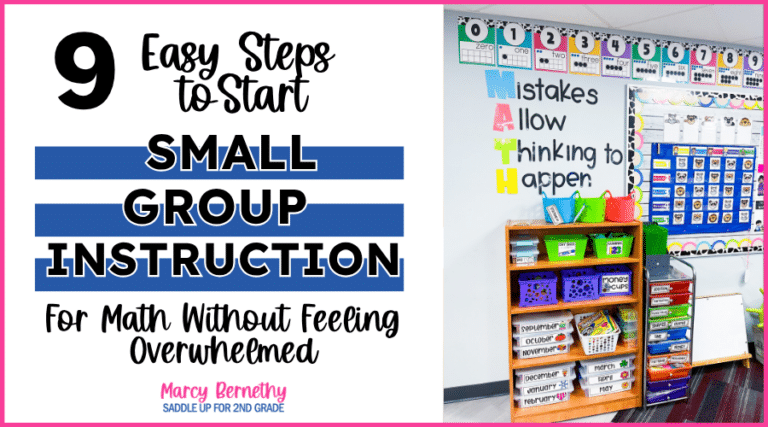
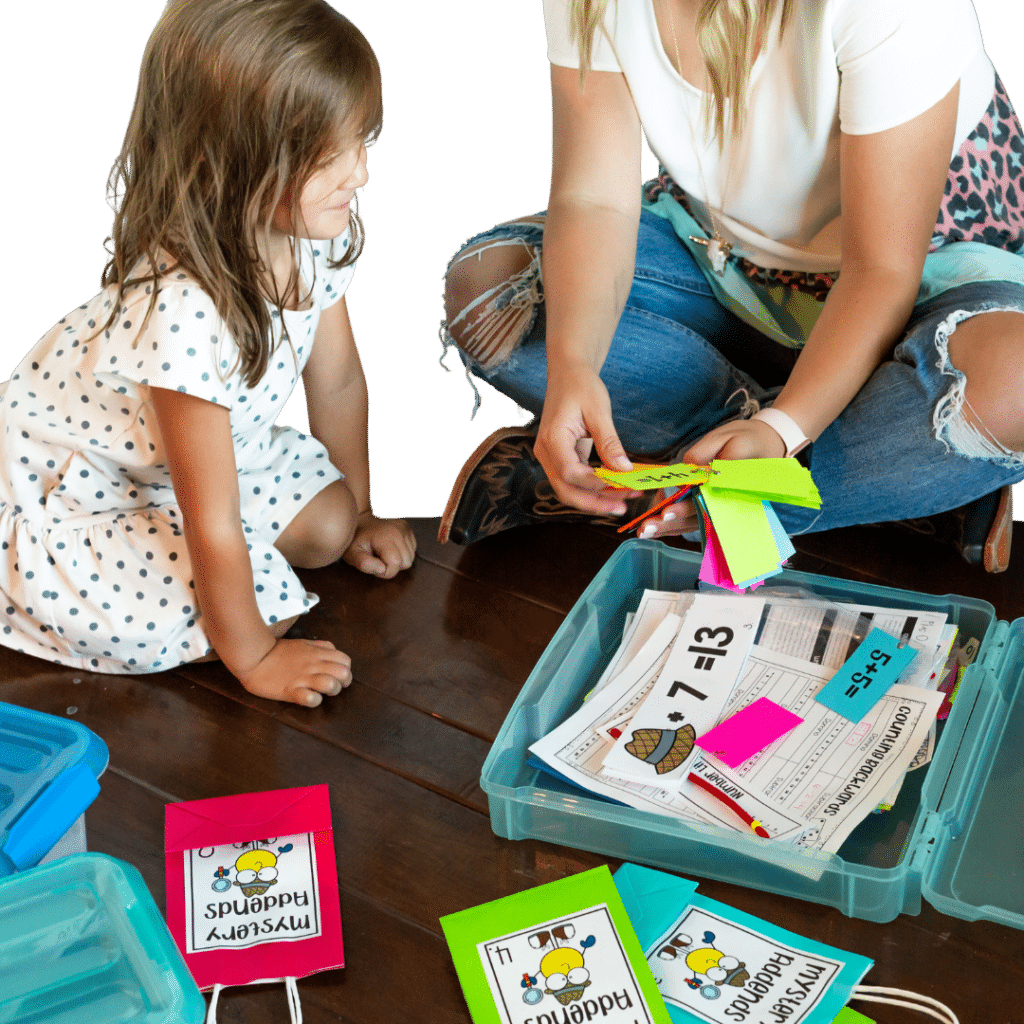
That’s exactly why I shifted away from relying solely on traditional whole group instruction and started using small group instruction.
If you’re the teacher that can totally relate to all of this, and you’ve seen these signs of math anxiety popping up in your classroom, you don’t have to keep teaching math the way you’ve always done it.
It doesn’t matter what your teaching style is, what curriculum your school uses, or how much time you have to teach math… you can teach in small groups and start supporting your students in the way they need.
I get it… changing up the way you’ve taught math can be scary. It’s something new and totally unknown to you, but I promise, it’s the most effective way to reach every single student in your classroom.
And luckily, you’re not alone!
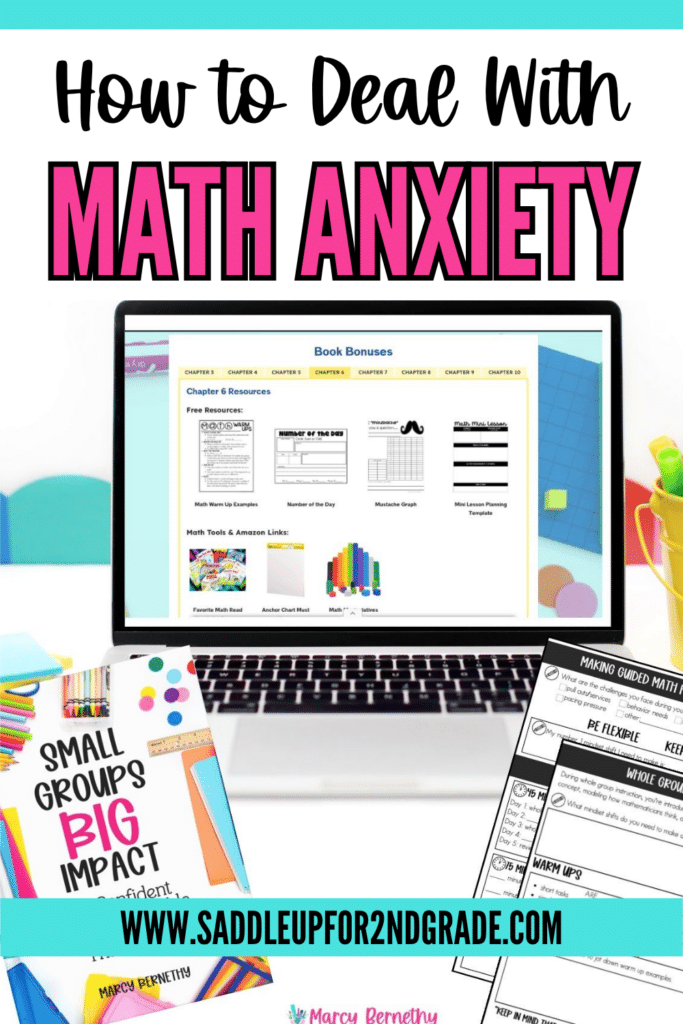
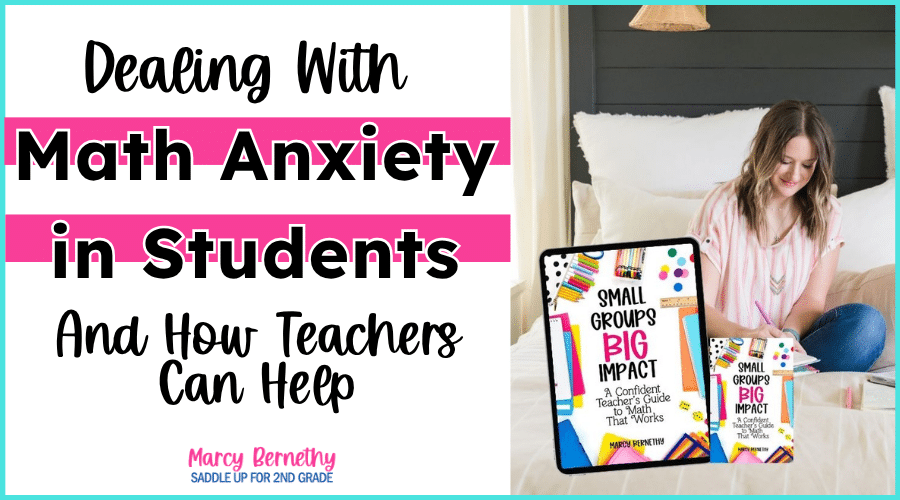
I wrote my book, Small Groups, Big Impact to be your personal guide to becoming a confident math teacher!
Inside the book, I walk you through how to:
Plus, you’ll get all the resources and support you need to actually put small group instruction into practice.
If you’re ready to change how you teach math and walk into next school year feeling confident (and instilling that same confidence in your students!), then grab your copy of the book today!
This summer, I’m also hosting a 6-week book study where we’ll read through Small Groups, Big Impact together and learn how to implement small group math instruction before the new school year!
If you’ve ever wanted support implementing small groups and building stronger math instruction without feeling overwhelmed, I’d love for you to join us.
You’ll also receive 10 PD credits for joining and participating!
Fill out the form below to join the Summer Book Study!
Math anxiety is real, and many students (more than you think) are carrying math struggles into our classrooms daily, whether silently or outwardly.
As teachers, we have the opportunity to change that story for them.
Sometimes, all it takes is one teacher to be brave enough to try a different approach, to create a supportive environment, and to be willing to try something new for the sake of their students.
And that teacher can absolutely be you.